
Efficient warehouse storage is essential for businesses that manage large quantities of inventory. Without an organized storage system, products can take up unnecessary floor space, become difficult to locate, and interfere with daily operations. A well-designed storage solution can help businesses make better use of their facilities while keeping inventory accessible and organized.
Pallet racking can provide several advantages, including improved space utilization, better inventory organization, and easier product access. Understanding how pallet storage works can help businesses determine whether it is appropriate for their warehouse, inventory, and operational needs.
Maximizing Available Storage Space
One of the primary advantages of pallet storage is its ability to make better use of available warehouse space. Instead of storing products exclusively on the floor, businesses can use vertical space to accommodate inventory at multiple levels.
Making use of vertical capacity can allow a warehouse to hold more products without requiring additional floor space. This can be particularly valuable for businesses operating in facilities where expansion is limited or expensive.
The height and configuration of a storage system should be based on factors such as ceiling height, building structure, inventory dimensions, and material-handling equipment. Careful planning can help businesses increase storage capacity without creating unnecessary obstacles for employees or equipment.
Supporting Different Inventory Needs
Warehouses may handle products of different sizes, weights, and quantities. Pallet storage systems can be configured to accommodate various inventory requirements, depending on the specific system selected.
Businesses can evaluate factors such as pallet dimensions, product weight, storage height, and expected inventory volume when selecting a configuration. This allows the storage system to be designed around the products rather than forcing inventory into an unsuitable arrangement.
Companies should also consider how inventory changes over time. A flexible storage configuration can make it easier to adapt as product lines, quantities, or operational requirements change.
Increasing Warehouse Efficiency
An organized storage layout can contribute to more efficient warehouse operations. Employees can spend less time searching for inventory when products have assigned locations, and material-handling equipment can follow more predictable routes.
Efficient storage can also help businesses establish consistent workflows. Receiving areas, storage locations, picking zones, and shipping areas can be arranged to support the movement of products through the facility.
Reducing unnecessary travel can save time during repetitive warehouse tasks. Over the course of a workday, even small improvements in movement and organization can contribute to greater productivity.
Supporting Inventory Management
Good storage practices can complement inventory management processes. When products have specific storage locations, businesses can more easily track quantities and identify inventory that needs to be replenished.
Warehouse operators can use barcodes, labels, inventory management software, and other tracking methods to maintain accurate records. These tools can work alongside physical storage systems to provide employees with better visibility.
Inventory rotation is another consideration. Businesses that handle products with expiration dates or specific usage requirements should organize storage according to appropriate rotation practices.
Making Better Use of Warehouse Floors
Floor space is valuable in many warehouses. When pallets are scattered throughout a facility or stored in areas that interfere with movement, the available space may not be used efficiently.
A structured storage system can help keep inventory off the floor and create clearer pathways. This can make it easier to move through the warehouse, clean work areas, and identify available storage capacity. Additionally, structured storage systems often facilitate quicker retrieval of items, which enhances overall workflow efficiency.
Using vertical space can also reduce the pressure to continually expand the warehouse footprint. Businesses may be able to increase capacity within their existing facility by evaluating how storage areas are configured.
Choosing the Right Storage Configuration
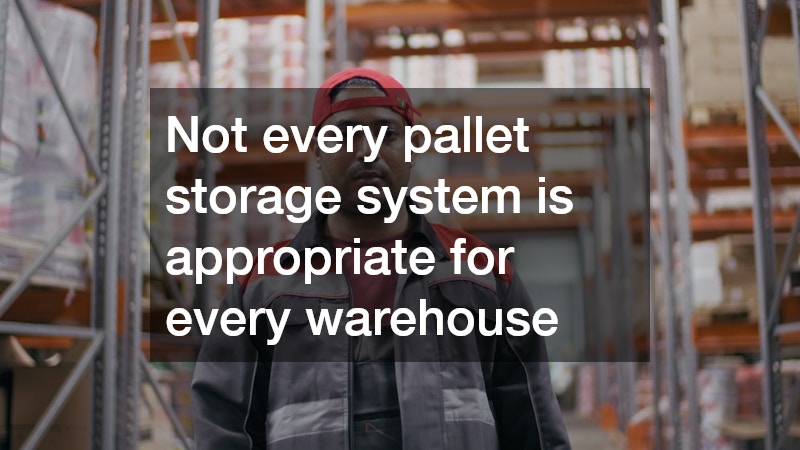
Not every pallet storage system is appropriate for every warehouse. Businesses should evaluate their products, available space, equipment, workflow, inventory turnover, and accessibility requirements before making a decision.
Some systems are designed for high-density storage, while others prioritize direct access to individual pallets. The best option depends on how inventory moves through the facility and what employees need to accomplish each day.
Professional guidance may be useful for businesses with complex storage requirements. A qualified provider can evaluate the facility and help identify a configuration that aligns with operational goals.
Pallet racking can provide businesses with improved organization, increased storage capacity, better use of vertical space, and easier access to inventory. A structured storage system can also support inventory management and create a more efficient warehouse layout.
Choosing the right configuration requires careful consideration of product dimensions, weight, inventory turnover, available space, equipment, and future growth. Safety should also remain a priority throughout the selection, installation, and use of the system.
With thoughtful planning, pallet storage can help businesses make better use of their warehouse facilities while creating a more organized environment for employees. Pallet racking can provide a practical foundation for efficient storage and daily operations when the system is appropriately designed for the warehouse’s specific needs.