Sustainable farming depends on everyday decisions about water, equipment, buildings, and waste. A leaking pipe, neglected ventilation unit, or poorly organized storage area can undermine broader efforts to conserve resources. Maintenance gives farm owners a practical way to improve environmental performance while keeping operations reliable.
The strongest approach connects individual tasks to the needs of the whole property. Water conservation should support crop production, material reuse should preserve safety, and drainage improvements should protect surrounding land. By inspecting systems regularly, addressing recurring problems, and measuring results, agricultural businesses can make sustainability an ongoing management practice. The following strategies apply across working farms, livestock facilities, greenhouses, and agricultural storage sites, with adjustments for local conditions.
Build a Maintenance Plan Around Seasonal Demands

Begin with an inventory of the systems that keep the property functioning. Include pumps, pipes, ventilation equipment, storage buildings, access routes, and waste collection areas. Record equipment specifications, service history, and the person responsible for each asset. Organize tasks around the agricultural calendar. Prepare watering equipment before peak demand, inspect drainage before wet weather, and schedule major repairs outside planting or harvest whenever possible. Manufacturer instructions should guide service intervals, with additional inspections when operating conditions are unusually demanding.
Prioritize problems according to their consequences. An active fuel leak or failing water connection deserves faster attention than a cosmetic building repair. Repeated breakdowns also warrant investigation because replacing the same component may leave the underlying issue unresolved.
Keep the system simple enough for workers to use consistently. A shared maintenance log should identify the problem, assigned action, completion date, and follow-up check. Photographs help document changes and give contractors useful context before arriving. Include energy use in the review by noting pump operating hours and building electricity consumption where practical. Investigate unexpected changes alongside equipment condition and workload before deciding whether repairs, control adjustments, or replacement are justified.
Protect Groundwater and Track Water Consumption
Start water management at the source. Inspect accessible well components for damaged covers, cracked casing, or deterioration around surface seals. Keep fertilizer mixing, fuel storage, and chemical handling away from the well, and maintain grading that directs surface runoff elsewhere. According to the U.S. Environmental Protection Agency, private drinking water wells should be tested annually for total coliform bacteria, nitrates, total dissolved solids, and pH. Additional testing depends on local contaminants and changing conditions, including flooding, system repairs, and noticeable changes in water quality. Use a certified laboratory and seek guidance when results raise concerns.
A qualified water well company can evaluate pump performance, pressure problems, and the condition of the water delivery equipment. Keep construction records and previous service reports available so recurring issues can be assessed in context.
Where meters are available, record consumption alongside acreage, livestock numbers, and seasonal activities. A sudden increase should prompt investigation before it becomes accepted as normal. Check trough valves, hose connections, and exposed pipes, then document repairs so later readings show whether the problem was resolved.
Match Water Delivery to Actual Growing Needs

An efficient watering schedule begins with crop requirements, soil conditions, and recent weather. Review field moisture before extending operating times, and account for rainfall when deciding whether another cycle is necessary. Maintenance helps equipment deliver the intended amount evenly. Check pipes for leaks, inspect emitters for blockages, and replace worn sprinkler components with compatible replacements. Incorrect pressure and damaged nozzles can compromise distribution, leaving some areas wetter than others.
An irrigation company with relevant agricultural experience can assess system pressure, application uniformity, and controls. Ask for a review of existing performance before considering new equipment. Adjustments or repairs may address the problem without replacing an otherwise serviceable installation.
Divide maintenance records by field or growing zone. Note where runoff, persistent wet spots, or uneven crop growth occurs, then compare those observations with soil and system measurements. Avoid increasing water across the entire property to compensate for a localized fault. Recheck performance after repairs. The goal is reliable delivery that supports production while limiting avoidable water use.
Maintain Ponds According to Their Purpose
Farm ponds may support livestock watering, irrigation storage, fish production, or several uses. Their maintenance needs depend on depth, inflows, nutrient loading, and the intended function. Establish those needs before investing in equipment or changing operating schedules. Where oxygen management is necessary, an aeration system should match the pond and its demands. Clemson Cooperative Extension explains that reducing nutrient inputs is essential to managing oxygen demand in ponds. Equipment alone does not resolve every water quality problem.
Follow the manufacturer’s maintenance schedule for motors, compressors, air lines, and diffusers, as applicable. Follow the installer’s startup instructions after shutdowns, and review operating changes with a specialist. Observe equipment performance and investigate unusual noise, reduced airflow, or interruptions. Where fish production depends on oxygen levels, use appropriate monitoring and a response plan developed with an aquaculture specialist.
Also review what enters the pond. Look for eroding banks, exposed soil, and runoff pathways carrying excess nutrients. Correcting these sources can support the same objectives as equipment maintenance. Keep records of observations, service work, and water quality measurements to guide future decisions.
Keep Sanitary Wastewater Systems Reliable
Farmhouses, employee restrooms, and other sanitary facilities may depend on onsite wastewater treatment. Include these systems in the property maintenance schedule and distinguish their requirements from those of manure handling or agricultural process wastewater. Arrange septic tank pumping according to professional inspection findings, tank capacity, wastewater volume, and solids accumulation. A fixed schedule borrowed from another property may not suit a facility with seasonal workers or changing occupancy.
Protect the drainfield by keeping vehicles, stored materials, and excess runoff away from it. Repair leaking fixtures and prevent oils, solvents, and pesticides from entering sanitary drains. EPA guidance emphasizes that both wastewater volume and what enters the system affect performance.
Make system locations clear to employees and visiting contractors so excavation, parking, or deliveries do not inadvertently damage buried infrastructure. Keep inspection reports and service dates together, along with contact information for the provider. If usage changes substantially, request an assessment before assuming the existing system can accommodate it. Planning around actual demand helps keep essential facilities dependable during the busiest periods.
Control Runoff at Its Source
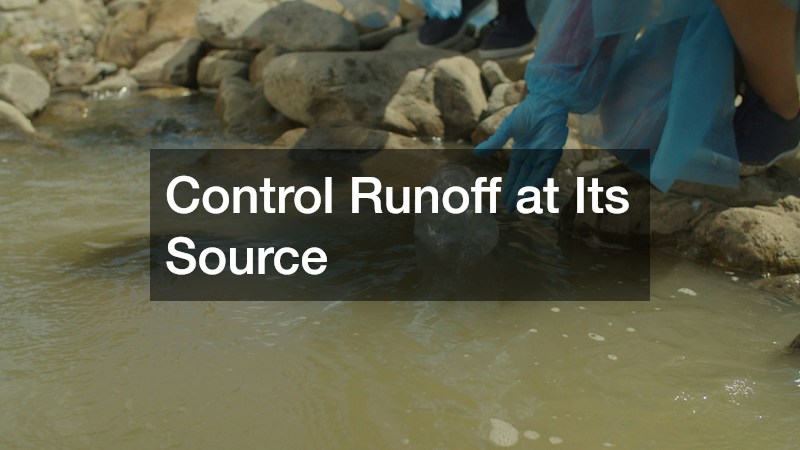
Walk the property during or shortly after rainfall when conditions are safe. Observe where water collects, which routes carry sediment, and whether roof runoff crosses areas containing manure, feed, or other potential pollutants. Inspect gutters, ditches, culverts, and storm drains for obstructions and damage. Remove accumulated material using an appropriate collection method rather than pushing it farther into the drainage network. Identify where each outlet leads before changing drainage routes.
The USDA Natural Resources Conservation Service recommends separating clean runoff from contaminated areas and maintaining conservation measures such as waterways and vegetated buffers. Its guidance includes keeping pipes clear, replanting bare areas, and watching for erosion.
Address recurring problems at their source. A blocked inlet may need cleaning, but repeated sediment buildup also calls for attention to the bare ground feeding it. Likewise, water pooling beside a building may require gutter repairs or a review of grading. Seek site-specific design advice when changing flows could affect neighboring land or downstream waterways.
Maintain Airflow in Enclosed Buildings
Workshops, offices, packing areas, and enclosed agricultural buildings need maintenance suited to their activities. Begin by identifying sources of dust, moisture, and exhaust, then check whether the ventilation equipment is appropriate for the space. Where HVAC systems use commercial air filters, select replacements compatible with the equipment and follow the manufacturer’s guidance. Inspect filters regularly and replace them as conditions require. A more restrictive filter should only be installed after confirming that the system can accommodate it.
Keep accessible intake grilles and ventilation openings unobstructed. Have qualified personnel service fans, controls, and other components, especially when airflow becomes inconsistent or workers notice recurring indoor conditions.
Filtration should accompany appropriate source control and ventilation. Particle filters do not address every airborne contaminant, so dusty handling processes or engine exhaust may need dedicated controls.
Purchase Carefully and Keep Materials in Use
Sustainable purchasing starts with knowing what is already available. Maintain an inventory of commonly used fittings, lubricants, fasteners, and repair items, and check it before ordering. Assign clear storage locations so usable materials are easy to find. Choose a farm supply provider based on product suitability, reliable availability, and options that support repair. Standardizing compatible components can simplify maintenance, but avoid substitutions that compromise equipment requirements. Ask about returnable containers, replacement components, and packaging take-back arrangements when relevant.
Review stock periodically for deterioration, expired products, and quantities that exceed realistic demand. Bulk ordering is useful only when materials can be stored properly and used within an appropriate period. For shipping materials, work with a pallet recycling service that can explain which items are suitable for repair, reuse, or processing. Separate chemically treated or visibly contaminated pallets from other collected wood. Confirm acceptance requirements before arranging collection.
Keep a clearly designated repair area for reusable items awaiting assessment. Label damaged materials so they cannot return to service accidentally, and set a review date to prevent the area from becoming permanent, unexamined storage. Track what is recovered and where it goes. Request collection records that identify accepted quantities and destinations, then use those records to adjust ordering and storage practices.
Coordinate Transportation With Daily Operations

Transport decisions influence how smoothly materials move through a farm. Prepare shipments before collection, confirm quantities, and give drivers clear instructions about access and unloading locations. An agricultural hauling service can help coordinate deliveries and collections around seasonal demand. Discuss load compatibility, scheduling, and whether suitable return loads are available. Consolidating movements makes sense when it reduces avoidable trips without compromising product condition, biosecurity, or delivery requirements.
Maintain loading areas so vehicles can maneuver predictably. Repair deteriorating surfaces, keep access routes clear, and make turning areas visible. During wet conditions, review routes before directing heavy vehicles onto vulnerable ground.
Evaluate performance using records rather than assumptions. Track missed pickups, loading delays, damaged goods, and unnecessary repeat journeys. These measures can reveal practical improvements such as revised collection windows or better storage arrangements. Coordinate with employees before changing the schedule. A tightly planned delivery still creates disruption if the receiving team lacks space, equipment, or time to handle it.
Maintain Boundaries That Support Land Stewardship
Boundaries influence livestock movement, access, and the condition of sensitive areas. Inspect gates, posts, wire, and connections regularly, with additional checks after storms or other events likely to cause damage. When planning fence installation, consider grazing management, equipment access, terrain, and the protection of streams or other vulnerable locations. USDA conservation guidance identifies controlled livestock access to waterbodies as a way to reduce nutrient and pathogen inputs. Suitable alternative watering arrangements should accompany restricted access.
Repair localized damage promptly and investigate why it occurred. Repeated failures near a gate may indicate a layout problem, while persistent pressure against a boundary may call for changes in animal management.
Include crossings and access points in the inspection routine. Gates should operate reliably, and necessary maintenance equipment should reach the areas it serves without disturbing protected ground. Review boundary layouts when land use changes. New buildings, altered grazing patterns, or relocated water points can make an older arrangement less effective. Maintenance should preserve function as well as physical condition.
Turn Maintenance Into Lasting Progress
A sustainable maintenance program needs clear responsibilities and realistic priorities. Choose a manageable group of initial improvements, assign ownership, and confirm that completed work delivers the intended result. Explain the purpose of each task during employee training, and make reporting straightforward. Workers should know whom to contact, which conditions need prompt attention, and where to find service information. Review these expectations whenever seasonal employees join the operation.
Review records throughout the year. Compare water consumption with production demands, examine recurring repairs, and check whether purchasing and collection arrangements reduce waste. Interpret changes alongside weather, occupancy, and operating conditions so ordinary fluctuations do not become misleading claims of improvement.
Use those findings to plan the next season. Some problems need equipment investment; others need better scheduling, training, or routine attention. Keeping these decisions connected to observed performance allows farms and agricultural facilities to conserve resources while protecting the systems their work depends on.