

A construction project popping up on your street can feel like an invasion of your daily routine, from the noise of early morning trucks to detours around fenced-off sidewalks. Whether it is a new home going up next door or a commercial renovation down the block, these projects bring real, tangible changes to traffic, utilities, noise, and even property values. Understanding what is actually happening behind the fencing can help you plan around the disruption instead of feeling blindsided by it. This article breaks down the most common ways local construction reshapes neighborhood life and what you can expect at each stage.
New Residential Developments and Changing Traffic Patterns

When a new subdivision or infill housing project breaks ground nearby, one of the first things neighbors notice is a shift in daily traffic. Construction crews, material deliveries, and eventually new residents all add vehicles to streets that were never designed for the extra volume. In many neighborhoods, a single active project can bring a dozen or more truck trips per day during peak building phases, plus the steady stream of worker vehicles arriving before sunrise and leaving well after dark. Local home builders typically work with city planners on traffic control plans, which may include temporary signage, flaggers during heavy delivery hours, or designated staging areas for equipment and materials. These plans help reduce the worst bottlenecks, but they rarely eliminate the friction entirely. Residents on narrow or dead-end streets often find themselves negotiating tight turns around parked cement trucks or waiting through unplanned delays. Once the development is finished, the traffic pattern shifts again, this time permanently. New driveways, additional stop signs, and higher daily car counts become the new normal, sometimes prompting the city to revisit speed limits or add crosswalks. For existing homeowners, that means adjusting to longer waits at intersections they once breezed through, and in some cases, watching quiet cul-de-sacs become regular cut-through routes. The adjustment period is rarely painless for people who already live there, and how disruptive it feels often depends on communication. Neighbors who receive advance notice of paving schedules, lane closures, or heavy-equipment deliveries tend to report far less frustration than those who are caught off guard week to week.
Beyond the immediate congestion, new development often triggers longer-term changes like new stop signs, speed bumps, traffic signals, or even road widening to accommodate the extra households moving in. A development of 50 or more units, for instance, can push a quiet residential street past the traffic volume thresholds that trigger a city engineering review, potentially resulting in four-way stops or reduced speed limits within a year or two of completion. Residents sometimes see a temporary dip in street parking availability as construction vehicles, dumpsters, and material deliveries occupy curb space for months at a time. In denser neighborhoods, contractors may need to secure temporary “no parking” permits for entire blocks during major phases like foundation pours or crane operations, which can push residents’ vehicles onto already-crowded side streets. It helps to check with your city’s planning department early on to understand the projected timeline and any planned road adjustments. Most municipalities post approved site plans and traffic impact studies online, and many require developers to hold a community meeting before breaking ground. Attending these sessions, or simply calling the planning office directly, can reveal details like expected completion dates, detour routes, and whether a temporary construction entrance will feed additional trucks onto your street.
- Expect increased truck traffic during morning (7-9 a.m.) and midday (11 a.m.-1 p.m.) hours, especially near material delivery zones
- Watch for temporary signage indicating lane closures, detours, or reduced speed limits near active work sites
- Ask your municipality about the project’s estimated completion date and whether phased milestones will be shared publicly
- Consider adjusted commute routes during peak construction phases, particularly if school zones or bus stops are nearby
- Sign up for local alerts or newsletters that flag road closures before they happen
- Factor in extra travel time on days when concrete pours or heavy equipment deliveries are scheduled
Underground Utility Work and Sewer Line Repairs
Many construction projects require utility upgrades that go far beyond what is visible above ground. Aging infrastructure often needs attention before new development can move forward, and that frequently means sewer lining work to repair or replace decades-old pipes without full excavation. This trenchless method is less disruptive than traditional digging, but it still requires temporary road closures and occasional water service interruptions.
Neighbors should expect some noise and vibration during this phase, particularly if crews are working near property lines. It is worth asking the project manager or contractor for a schedule of expected utility shutoffs so you can plan accordingly. Most municipalities require advance notice before any interruption to water or sewer service, so keep an eye on mailed notices or posted flyers.
- Ask about expected duration of any water service interruptions
- Request written notice before utility shutoffs when possible
- Understand that trenchless repair methods reduce yard damage
- Keep contact information for the utility company on hand
Noise, Dust, and Heavy Machinery on Nearby Lots

Construction sites rely on a wide range of heavy machinery, and much of it comes from a heavy equipment rental company rather than being owned outright by the contractor. This matters to neighbors because rental equipment is often delivered and picked up on tight schedules, which can mean early morning drop-offs or late afternoon returns that add to noise levels. Excavators, loaders, and compactors are typically the loudest offenders during site preparation.
Dust control is another common concern, especially in dry climates or during extended dry spells. Reputable contractors will water down exposed soil and use fencing or netting to contain debris, but some drift is unavoluable during grading and excavation. If dust becomes a persistent problem, most cities have code enforcement offices that field complaints about construction sites failing to control it properly.
- Close windows during peak excavation or grading hours
- Ask contractors about their dust suppression methods
- Report excessive noise outside permitted work hours to the city
- Expect equipment deliveries early in the morning on active sites
Commercial Renovations and Medical Office Construction

Not all nearby construction is residential. Strip malls and office parks frequently undergo interior renovations, and a doctor office build out is one of the more common projects in these settings due to rising demand for local healthcare services. These builds often involve specialized plumbing, electrical, and HVAC work to meet medical code requirements, which can extend the timeline compared to a standard retail renovation.
For neighbors living near a commercial strip, this type of project usually means increased contractor parking and deliveries of specialized equipment during business hours. The good news is that medical office construction tends to be less disruptive at night since most work happens during standard weekday hours. Once complete, these projects often bring added convenience in the form of new healthcare providers within walking distance.
- Expect contractor vehicles occupying shared parking areas temporarily
- Anticipate daytime work hours rather than evening disruption
- Look forward to new services once the build out is finished
On Site Sanitation and Site Amenities for Crews
Every construction site needs sanitation facilities for its workers, and the type of unit provided often depends on the project’s size and visibility. In upscale neighborhoods or near commercial storefronts, contractors increasingly opt for a fancy porta potty complete with sinks, ventilation, and a more discreet exterior appearance. This might seem like a minor detail, but it actually reflects a broader trend of contractors trying to minimize the visual and sanitary impact on surrounding properties.
Placement of these units matters too. Responsible contractors position sanitation facilities away from property lines and public sightlines whenever possible, and they schedule regular servicing to avoid odor complaints. If you notice a facility placed too close to your fence line or sidewalk, it is reasonable to raise the concern directly with the site supervisor.
- Note the placement of sanitation units relative to your property line
- Ask about servicing frequency if odor becomes an issue
- Recognize that upgraded units are increasingly common in visible locations
Debris Removal and Dumpster Placement on Residential Streets
Nearly every construction project, big or small, requires a dumpster rental to handle demolition debris, packaging waste, and leftover materials. These containers are often placed curbside or in a driveway, which can temporarily reduce street parking or block sightlines for drivers backing out of nearby homes. Most cities require a permit for dumpsters placed on public streets, so if one appears without clear signage, it is worth a quick call to code enforcement.
The size and turnover rate of these containers depends on the scope of the project. A small kitchen remodel might need one dumpster for a week, while a full teardown could require multiple swaps over several months. Neighbors should also be aware that dumpster placement sometimes attracts illegal dumping from passersby, which can extend how long the container sits on the street.
- Confirm whether a street placement permit is posted on site
- Expect noise from dumpster drop-off and pickup trucks
- Watch for overflow debris if a dumpster sits too long between swaps
HVAC and Energy System Upgrades During Remodels
Many renovation projects, especially older home remodels, include a heat pump replacement as part of a broader push toward energy efficiency. This work usually involves both indoor and outdoor unit installation, which can mean a day or two of visible activity in a neighbor’s side yard or near shared property lines. While the work itself is relatively quiet compared to excavation, it does involve refrigerant handling and electrical work that require licensed technicians.
For neighbors, the biggest impact tends to be temporary. Once the new system is installed, most homeowners find that upgraded heat pumps run quieter than older HVAC units, which is actually a long-term benefit for anyone living nearby. It is reasonable to ask a neighbor undergoing this kind of upgrade about the installation timeline if outdoor unit placement is close to a shared fence.
- Expect one to two days of installation activity for most upgrades
- Anticipate quieter operation once new equipment is running
- Ask about outdoor unit placement if it sits near your property line
Structural Work Involving Roofing and Overhead Cranes
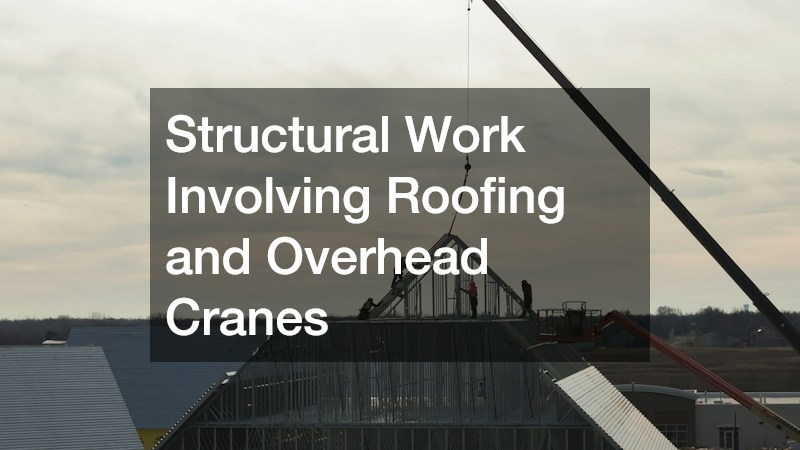
Larger construction projects, particularly commercial buildings or multi-story residential developments, often involve overhead lifting equipment that can be visible from blocks away. Crane services are typically brought in for placing structural steel, HVAC units on rooftops, or large trusses that cannot be maneuvered by hand. These operations require temporary street or sidewalk closures for safety, and neighbors should expect advance notice before a crane lift takes place.
Roofing work on commercial buildings frequently involves roof metal decking, which serves as the structural base before insulation and final roofing materials go on. Installing this decking can be noisy due to the fastening process, and it often coincides with crane operations since large decking panels are lifted into place from the ground. This phase usually lasts only a few days but tends to be one of the loudest parts of the entire build.
- Expect temporary street closures during scheduled crane lifts
- Anticipate louder noise levels during decking installation
- Watch for posted notices announcing crane operation dates
Business Relocations and Storefront Transitions
When construction forces an existing business to relocate, either temporarily or permanently, neighbors and regular customers often feel the ripple effects. Business moving companies handle much of this transition, coordinating everything from furniture and equipment to sensitive inventory that needs careful handling. For a busy retail corridor, this can mean a few days of moving trucks and temporary loading zone closures.
These transitions also affect the surrounding business community, since foot traffic patterns shift while a storefront sits vacant or under renovation. Neighboring businesses sometimes see a temporary uptick in customers who can no longer visit the relocated shop, while others experience a dip due to reduced overall foot traffic in the area. Keeping an eye on local business association updates can help residents and other business owners anticipate these shifts.
Construction near your home or business does not have to remain a mystery of noise and orange cones. By understanding each phase, from utility work to structural framing to final move-in, you can better anticipate disruptions and even appreciate the improvements headed your way. The next time a project breaks ground nearby, consider reaching out to the site supervisor or your city’s planning office with specific questions about timeline and impact. A little research now can save considerable frustration once the real work begins.