
There are few milestones in the lifecycle of a business more exhilarating—and simultaneously daunting—than outgrowing your current footprint. A physical expansion signifies market success, a growing team, and a solidifying brand presence. However, the sheer excitement of signing a new lease or purchasing a larger building is often quickly eclipsed by the harsh realities of project management. The transition period between recognizing the need for more space and successfully operating within it is fraught with logistical complexities, hidden expenses, and the ever-present threat of severe operational downtime.
Many business owners approach relocation and renovation with a misplaced sense of optimism, underestimating the intricate web of permitting, infrastructure upgrades, and sheer physical labor required to transform a raw shell into a functional headquarters. This underestimation frequently leads to blown budgets, delayed opening dates, and a deeply stressed workforce. The solution lies in a fundamental shift in perspective: moving and renovating is not just a series of improvised chores to be squeezed in between your daily operational duties. It is a highly structured, phased project that demands rigorous planning, dedicated oversight, and a proactive defense against the unexpected.
A successful transition requires mapping out every single variable months in advance. It means looking past the aesthetic potential of a building to critically evaluate its hidden infrastructure. It means understanding that keeping your business running seamlessly while your physical world is packed up in boxes is an art form of its own. This comprehensive guide provides a detailed roadmap for your expansion. By systematically evaluating your raw space, securing your exterior utilities, modernizing internal frameworks, designing for maximum productivity, and executing a flawless move, you can turn a stressful necessity into a strategic triumph.
Evaluate and Secure the Right Location Before Breaking Ground

The foundation of a successful expansion is laid long before a single wall is demolished or a desk is moved. Securing the appropriate location dictates the trajectory of your entire renovation budget. A building that looks like a steal on paper can quickly become a financial sinkhole if its underlying infrastructure or legal zoning does not align with your operational needs.
Conduct a Thorough Needs Assessment for Your Team and Inventory
Before you even begin touring potential sites, you must deeply analyze your current operational bottlenecks. What exactly is driving your need to move?
-
Space Utilization: Audit your current layout. Are your employees cramped in tight cubicles, leading to decreased morale? Is your inventory spilling out of your warehouse into hallways? Document the exact square footage deficits you are experiencing.
-
Workflow Inefficiencies: Identify physical barriers to productivity. Perhaps your manufacturing team has to walk too far to access raw materials, or your sales team lacks private meeting areas for client calls.
-
Future Forecasting: Do not just lease for your needs today; lease for your projections five to ten years from now. If you anticipate a 30% increase in headcount over the next three years, your new space must be able to accommodate those unhired employees seamlessly.
Negotiate Lease or Purchase Terms with Future Growth in Mind
Once you begin touring buildings, the negotiation phase is where massive savings can be secured. Finding the right commercial property is about much more than negotiating the base monthly rent. It involves a strategic discussion about who absorbs the cost of making the space usable for your specific industry.
During negotiations, prioritize securing a generous Tenant Improvement (TI) allowance. A TI allowance is a sum of money provided by the landlord to help configure the space to your needs. Depending on the length of your lease, landlords may cover the cost of erecting new walls, upgrading restrooms, or installing new HVAC systems. Furthermore, scrutinize the zoning laws, municipal parking ratios, and expansion clauses. You must ensure that local regulations legally permit your type of business to operate in that zone, and that you have the right of first refusal on adjacent suites if you continue to grow.
Assemble Your Project Management Team Early
Business owners are accustomed to taking charge, but acting as a DIY project manager for a large-scale renovation is a massive mistake. The intricacies of municipal building codes, trade scheduling, and materials procurement require dedicated expertise.
Hiring a reputable commercial contractor very early in the process is one of the smartest investments you can make. They act as the central nervous system of your renovation, overseeing the permitting process, managing specialized tradesmen, and ensuring that the construction timeline does not bleed endlessly into your operational hours. By bringing them in during the leasing or purchasing phase, they can also provide realistic cost estimates for the renovations you envision, preventing you from committing to a building that is too expensive to retrofit.
Secure the Building Envelope and Hidden Infrastructure
It is a common error to focus immediately on interior aesthetics—paint colors, light fixtures, and office layouts—while neglecting the shell of the building itself. However, a beautifully designed interior is completely useless if the exterior envelope fails, allowing water intrusion or environmental hazards to destroy your investment.
Inspect and Weatherproof the Building’s Highest Points
The roof of any industrial or office building is its first line of defense against the elements, and it is notoriously expensive to repair. Before any interior drywall goes up or flooring is laid down, the building envelope must be entirely secured and validated.
Bring in specialized roofing contractors during your initial inspection phase. Commercial flat roofs, in particular, are prone to subtle issues that go unnoticed by the untrained eye, such as ponding water, failing seams on TPO membranes, or deteriorating flashing around HVAC units. Identifying these issues early allows you to force the current owner or landlord to address the repairs before you take possession. If you are purchasing the building, understanding the remaining lifespan of the roof allows you to budget for its inevitable replacement without derailing your operational cash flow.
Assess Underground Waste and Plumbing Capabilities
A frequently overlooked aspect of business relocation, particularly when moving into sprawling industrial parks, older manufacturing districts, or rural business centers, is the waste management infrastructure. Municipal sewer lines are not a guarantee everywhere.
If your new facility relies on an independent waste system, you must partner with professional commercial septic services to perform a comprehensive audit of the tanks, drain fields, and grease traps. This is exceptionally critical if your expansion involves a significant increase in employee headcount or if your business produces specialized wastewater (such as food processing or manufacturing runoff). An overloaded or failing underground waste system will lead to catastrophic backups, immediate health department closures, and staggering environmental cleanup fines. Ensure the infrastructure matches your projected output.
Factor Environmental and Zoning Regulations into Exterior Work
Securing the exterior also means ensuring your building complies with local and federal environmental and accessibility regulations. Ignorance of these laws is not a valid defense and will result in halted construction and heavy penalties.
-
ADA Compliance: Evaluate all exterior access points. Are the ramps graded correctly? Are the parking spaces painted and designated according to the Americans with Disabilities Act?
-
Exterior Lighting and Security: Conduct a nighttime audit of the property. Poorly lit parking lots are a massive liability for employee safety and property theft. Plan to install high-lumen, energy-efficient LED floodlights and visible security camera housings.
-
Signage Ordinances: Do not assume you can install a massive illuminated sign on the facade. Municipalities have strict zoning ordinances regarding the size, brightness, and placement of exterior signage. Pull these ordinances early so you can design your marketing materials within legal parameters.
Modernize Core Utilities for Efficiency and Safety

Older buildings, even those constructed just twenty years ago, were not designed to handle the technological density of the modern workplace. Before you begin framing walls and painting, you must strip the building back to its core utilities and modernize the power grid, climate control, and communication frameworks to prevent daily operational failures.
Upgrade the Power Grid to Handle Increased Technological Demands
The average business today requires a massive amount of electricity. Between dense clusters of dual-monitor workstations, heavy-duty printing stations, dedicated server rooms, and breakroom appliances, an older electrical panel will trip constantly under the strain.
To prevent this, hire a licensed commercial electrician to perform a load calculation on the existing panels. They will likely need to pull new heavy-duty wiring, upgrade the main amperage coming into the building, and install dedicated circuits for sensitive equipment. A dedicated circuit ensures that a power surge caused by a warehouse compressor turning on does not fry the servers holding your entire customer database. Proper electrical modernization is not just about convenience; it is a critical fire safety measure.
Optimize Climate Control to Reduce Long-Term Energy Costs
Heating and cooling a large, expansive workspace is consistently one of the highest overhead costs for a physical business. Industrial spaces with high ceilings or older office parks with drafty windows can bleed thousands of dollars in wasted energy every single month if the climate control system is constantly fighting the outside elements.
Rather than just replacing the HVAC units with larger, more expensive models, address the root cause of energy loss. Working with experienced insulation contractors to upgrade the thermal barriers in your walls and ceilings is a one-time expense that yields massive, recurring monthly savings. Upgrading to closed-cell spray foam or high-R-value rigid board barriers dramatically reduces the strain on your heating and cooling equipment, extending the lifespan of your HVAC units while keeping your employees comfortable and productive.
Plan for Redundancy in IT and Communication Frameworks
Your business cannot survive without a stable internet connection and internal network. The best time to build a robust IT framework is when the walls are completely open and the drop ceilings have not yet been installed.
-
Structured Cabling: Do not rely solely on Wi-Fi for critical desktop operations. Run shielded CAT6 or fiber optic cables to every workstation, conference room, and heavy machinery terminal. Hardwired connections offer superior speed, security, and stability.
-
Server Room Environment: Designate a specific, physically secure room for your IT infrastructure. This room requires its own dedicated cooling system (mini-split AC) because servers generate immense heat and will shut down if they surpass safe operating temperatures.
-
Backup Power Systems: Power grid outages happen. Install an Uninterruptible Power Supply (UPS) system for your server racks to provide a 15-minute battery buffer, allowing systems to save data and shut down safely. For ultimate redundancy, consider hardwiring a standby natural gas generator to keep the entire building online during regional blackouts.
Design a High-Performance, Brand-Aligned Interior
With the infrastructure secured, the focus shifts to creating an environment that actively works for your business. The interior design of a workspace is a powerful psychological tool. It dictates how efficiently your team communicates, how much fatigue they experience throughout the day, and what level of professionalism your visiting clients perceive.
Craft Layouts That Boost Employee Productivity and Client Experience
The open-concept office trend of the last decade has proven to be highly distracting for many industries. Modern workspace design requires a hybrid approach, blending collaborative zones with private, quiet areas for deep focus.
Optimizing this spatial flow is incredibly difficult to do intuitively. Recommending the expertise of interior design contractors can bridge the gap between aesthetic desires and functional reality. They can analyze your departmental interactions to determine who needs to sit near whom. For instance, the loud, energetic sales team should be physically separated from the accounting department requiring intense concentration. Furthermore, they can help translate your brand’s identity into the physical architecture, ensuring that the lobby, waiting areas, and conference rooms project the exact level of innovation, trust, or luxury that you want your clients to feel upon entering.
Select Durable Surfaces for High-Traffic Zones
A common pitfall in business renovations is selecting materials based solely on cost and appearance, rather than durability. Using residential-grade carpets, laminate flooring, or standard interior paint in a high-volume business environment guarantees that the space will look battered and unprofessional within six months.
You must invest in commercial-grade materials designed for heavy abuse. For warehouses, manufacturing floors, automotive bays, or high-traffic retail corridors, bare concrete is prone to staining and creating hazardous concrete dust. Applying a heavy-duty commercial floor coating, such as a specialized epoxy or polyaspartic system, is a vital upgrade. These resinous surfaces are highly resistant to chemical spills, handle the weight of forklifts without cracking, and provide a slip-resistant, easy-to-clean barrier that protects the concrete slab beneath it for decades.
Incorporate Ergonomic and Acoustic Solutions
Employee comfort directly correlates with output and retention. If your team is physically uncomfortable or constantly distracted by noise, your bottom line suffers.
-
Acoustic Management: Hard surfaces like concrete floors, exposed metal ceilings, and glass walls create an echo chamber. Mitigate noise pollution by installing suspended acoustic clouds, fabric-wrapped sound-dampening panels on the walls, and high-density carpet tiles in designated quiet zones.
-
Lighting Design: Fluorescent lighting is notorious for causing eye strain and headaches. Transition entirely to adjustable LED panel lighting. Wherever possible, design the layout to maximize natural daylight, positioning desks near windows and using glass partitions instead of opaque walls for interior offices.
-
Ergonomic Furniture: Do not reuse aging, unsupportive chairs. Invest in high-quality, adjustable ergonomic seating and consider offering sit-stand desks to promote better circulation and reduce midday fatigue among your staff.
Orchestrate a Seamless Transition and Establish Ongoing Operations
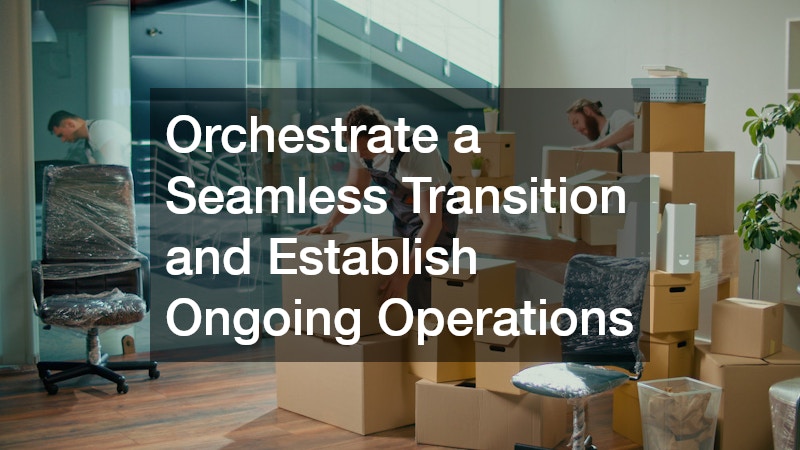
The final hurdle of your expansion is the physical relocation. The transition phase is the most vulnerable period for your business, as operational downtime directly equates to lost revenue and frustrated clients. A seamless move requires military-level precision and a swift shift into long-term facility management.
Coordinate Logistics to Minimize Operational Downtime
Your physical move should not disrupt your customer’s experience. Planning the logistics of moving day involves creating a highly detailed, hour-by-hour timeline, typically scheduled over a long weekend.
Keep your customer-facing operations live at the old location for as long as possible while the backend infrastructure is set up at the new site. To execute this without destroying your equipment or exhausting your staff, hiring a specialized commercial mover is an absolute necessity. These professionals are equipped to properly disconnect, transport, and reconnect sensitive server racks, tear down and rebuild modular cubicle systems, and move heavy manufacturing machinery using the correct rigging. Attempting to have your sales team or warehouse staff rent a box truck and move everything themselves is a recipe for broken inventory, personal injury liabilities, and massive delays.
Implement a Proactive Care Schedule for Your New Investment
The moment you take occupancy, your mindset must shift from renovation to preservation. A newly renovated facility is a massive financial asset, and allowing it to degrade due to neglected maintenance is a terrible waste of capital.
Do not wait for things to break before addressing them. Immediately establish ongoing contracts with reliable commercial maintenance services to handle the routine, unglamorous tasks that keep a building running. This includes scheduling quarterly HVAC filter changes to protect your expensive new units, setting up daily janitorial workflows to keep restrooms and breakrooms sanitary, and contracting exterior landscapers to maintain your curb appeal. Proactive care ensures your new headquarters remains as pristine and impressive on day one thousand as it was on day one.
Celebrate the Milestone with Your Team and Customer Base
Finally, use the momentum of the new space to invigorate your corporate culture and marketing efforts.
Start with a “soft launch” for your employees. Give them a few days to unpack, test their new workstations, figure out the new commuting routes, and identify any minor IT glitches that need resolving. Once the team is settled and the operations are humming smoothly, leverage the expansion publicly. Host a grand opening or ribbon-cutting event. Invite your top clients, local vendors, and community leaders to tour the facility. A successful relocation is a powerful testament to your company’s stability and growth, signaling to the market that your business is thriving, resilient, and prepared for the future.