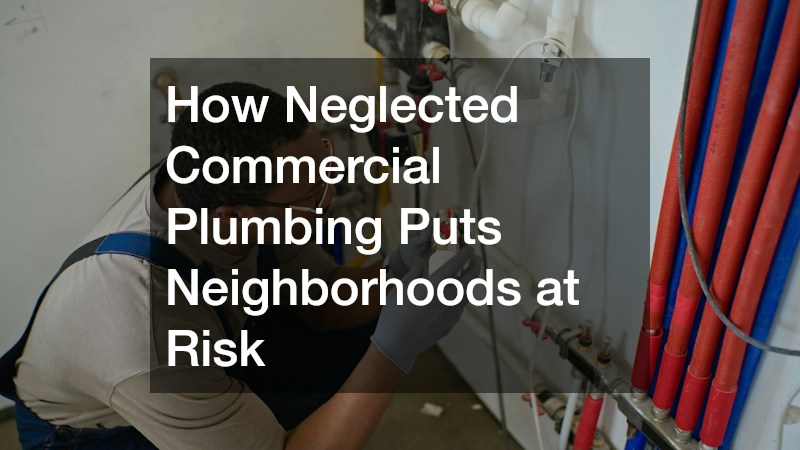
A burst pipe or backed-up sewer line behind a storefront might seem like a problem for just one business owner, but the ripple effects reach much further than most people realize. Streets flood, sinkholes form, drinking water gets contaminated, and entire blocks can be shut down because a commercial property owner skipped routine maintenance. Understanding how these systems work, and what happens when they fail, helps residents, tenants, and property owners alike protect the places they live and work.
This guide breaks down the hidden risks of neglected commercial plumbing and what signs to watch for before small issues become neighborhood-wide emergencies.
Aging Sewer Lines Beneath Business Districts
Many commercial buildings sit on sewer infrastructure that is decades old, and in older downtown districts, some pipes predate modern building codes entirely. Cast iron and clay pipes corrode and crack over time, allowing tree roots, soil, and debris to infiltrate the line. When these lines fail, the damage is rarely contained to a single property because shared municipal connections mean a blockage in one building can back up service to neighboring ones.
The consequences extend beyond inconvenience. A collapsed sewer line under a parking lot or sidewalk can undermine the ground above it, creating sinkholes that endanger pedestrians and vehicles. Cities often require business owners to carry the cost of repairing these failures, but by the time a collapse is visible above ground, the damage below has usually been building for years.
- Cracked clay or cast iron pipes allow groundwater and soil to seep in
- Tree root intrusion is one of the most common causes of blockages
- Shared municipal lines mean one failure can affect multiple buildings
- Sinkholes and pavement damage often signal deep infrastructure failure
Grease Trap Failures in Restaurants and Food Service
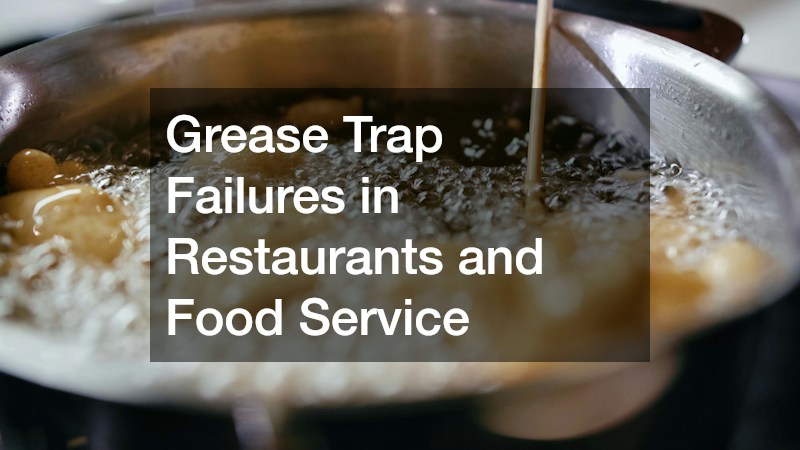
Restaurants, cafes, and food courts rely on grease traps to keep fats, oils, and grease from entering the public sewer system. When these traps are not cleaned on schedule, grease hardens inside pipes and gradually narrows the flow until a complete blockage occurs. This is one of the most preventable yet frequent causes of commercial plumbing emergencies in dense retail and dining corridors.
A grease trap overflow does not just affect the kitchen it serves. Grease and sewage can back up into neighboring units, flow into storm drains, and eventually reach local waterways where it harms aquatic life and violates environmental regulations. Many municipalities now require documented grease trap maintenance logs specifically because so many neighborhood sewer backups trace back to food service businesses that ignored this simple task.
- Grease traps should typically be cleaned every one to three months
- Hardened grease buildup is a leading cause of commercial sewer backups
- Overflow can contaminate storm drains and nearby water sources
- Many cities now mandate maintenance records for food service plumbing
Septic System Oversight for Standalone Commercial Properties
Not every commercial property connects to a municipal sewer system. Shopping centers, warehouses, and buildings in more rural or suburban areas often rely on septic systems designed to handle significant daily wastewater volume. Without regular commercial septic system pumping, solid waste accumulates faster than the system can process it, eventually leading to backups that surface in parking lots, drainage ditches, or even inside the building itself.
A failing commercial septic system poses a direct public health risk to the surrounding neighborhood. Overflow can seep into groundwater, contaminate nearby wells, and create standing wastewater that attracts pests and spreads odor for blocks. Property owners who schedule routine inspections and pumping avoid not only costly emergency repairs but also the liability that comes with a system failure that affects neighboring land or water sources.
- Septic systems need pumping on a schedule based on usage and tank size
- Warning signs include slow drains, soggy ground, and sewage odor outdoors
- Groundwater contamination can affect nearby wells and water supplies
- Regular inspections catch small problems before they become costly failures
Backflow Prevention Devices and Public Water Safety
Backflow prevention devices exist to stop contaminated water from flowing backward into the public drinking water supply, and commercial properties are required to have them tested annually in most jurisdictions. A malfunctioning or missing backflow preventer can allow chemicals, bacteria, or wastewater to enter the municipal system during a pressure drop, putting an entire neighborhood’s water supply at risk. This is one of the few plumbing failures that can affect public health immediately rather than gradually.
Businesses that handle chemicals, irrigation systems, or commercial kitchens face the highest scrutiny because their wastewater carries greater contamination risk. Local water authorities typically require certified testing and documentation, and failure to comply can result in fines or water service disconnection. Residents rarely think about backflow prevention until a boil-water advisory hits their neighborhood, which is often the first visible sign that something upstream has gone wrong.
- Annual testing is legally required for most commercial properties
- High-risk businesses include restaurants, labs, and irrigation-heavy properties
- Failed devices can trigger boil-water advisories for entire neighborhoods
- Noncompliance can lead to fines or forced water shutoffs
Stormwater Drainage and Flood Risk from Poor Maintenance
Commercial properties are often responsible for maintaining their own stormwater drains, catch basins, and retention systems, but these components are easy to forget because they only matter during heavy rain. When debris, sediment, or structural damage blocks these systems, water has nowhere to go and instead pools in parking lots, floods neighboring streets, or overwhelms the municipal storm sewer system. In low-lying neighborhoods, this can mean flooded basements and damaged homes that have nothing to do with the original property.
Routine inspection of stormwater infrastructure is especially important before and after major storm seasons. Property managers who clear catch basins, check for cracked piping, and confirm that retention ponds are functioning correctly reduce flood risk not just for their own site but for the surrounding drainage network. Neglect in this area tends to surface suddenly, often during the worst possible weather conditions.
- Clogged catch basins are a leading cause of localized flooding
- Retention ponds need regular sediment removal to function properly
- Pre-storm inspections catch problems before heavy rainfall hits
- Flooding from one property can quickly spread to neighboring streets
Conclusion
Commercial plumbing failures rarely stay contained to the property where they start, which is exactly why neighborhood residents and local business owners both have a stake in how well these systems are maintained. Recognizing early warning signs, from slow drains to unexplained odors to pooling water, gives communities a chance to push for repairs before a small issue becomes a public health or safety emergency. If you manage a commercial property or simply want to understand the infrastructure around you, start by asking questions about maintenance schedules and inspection history. A little awareness now can prevent a much bigger disruption later.